Planet Ocean

Showcasing Ocean Intelligence in experiential and immersive ways to create the next generation of
ocean-aware people

There is something the ocean has always known that we are only beginning to remember. The kind of knowledge that moves through a body and changes how it stands in the world. The ocean has been solving the problems of survival for 3.5 billion years. It is an intelligence. Planet Ocean exists because that intelligence deserves an address.
inhale
The ocean breathes on a rhythm 250 times slower than yours.
Both of you are breathing right now.
Every rhythm
that keeps you alive
the ocean invented first.
The ocean has been solving the problems of survival for 3.5 billion years. Its intelligence is alive in the movement of water, the generation of oxygen, the sequestering of carbon, the cycling of salt, the breathing of tides. Select a rhythm below and feel what that means.
Choose a rhythm
Sources

ABOUT OCEAN INTELLIGENCE

AI can simulate worlds but only Ocean Intelligence can sustain the real world.
- Nandita Parker, Founder
Machine learning can model futures, run scenarios, predict outcomes with remarkable precision. And yet the actual code for planetary survival was written long before any computer existed, in the ocean, across 3.5 billion years of continuous adaptive life.

Consider what that means in real terms. The ocean produces more than half of the oxygen in every breath you take right now, generated largely by phytoplankton so small that a single drop of seawater contains millions of them. It absorbs more than 90% of the excess heat the planet has accumulated since industrialisation. It hosts an estimated 80% of all life on Earth, most of it still unnamed, still undescribed.

This is the active work of a living system that has been regulating this planet's climate, chemistry, and biological diversity since long before the first tree grew, long before the first lung drew breath. The ocean is doing what every civilisation has tried and failed to do, and it has been doing it for longer than we can meaningfully imagine.

Ocean Intelligence guides our work in the Planet Ocean project. Through scientific knowledge we create immersive experiences which allow the body to experience this intelligence as a felt reality, because felt realities change behavior in ways that information alone does not.

We are not in a crisis of information. We have more information than any previous generation could have imagined. We are in a crisis of relationship, of felt connection, of feeling and experiencing what we know abstractly in the mind. It is with that, that we create and change the world.
We're here to bridge the gap.

OUR FIRST IMMERSION IN GOA, INDIA

The 55th International Film Festival, Goa, India

Ma Oceans: Revolutionizing Ocean Conservation with Innovation

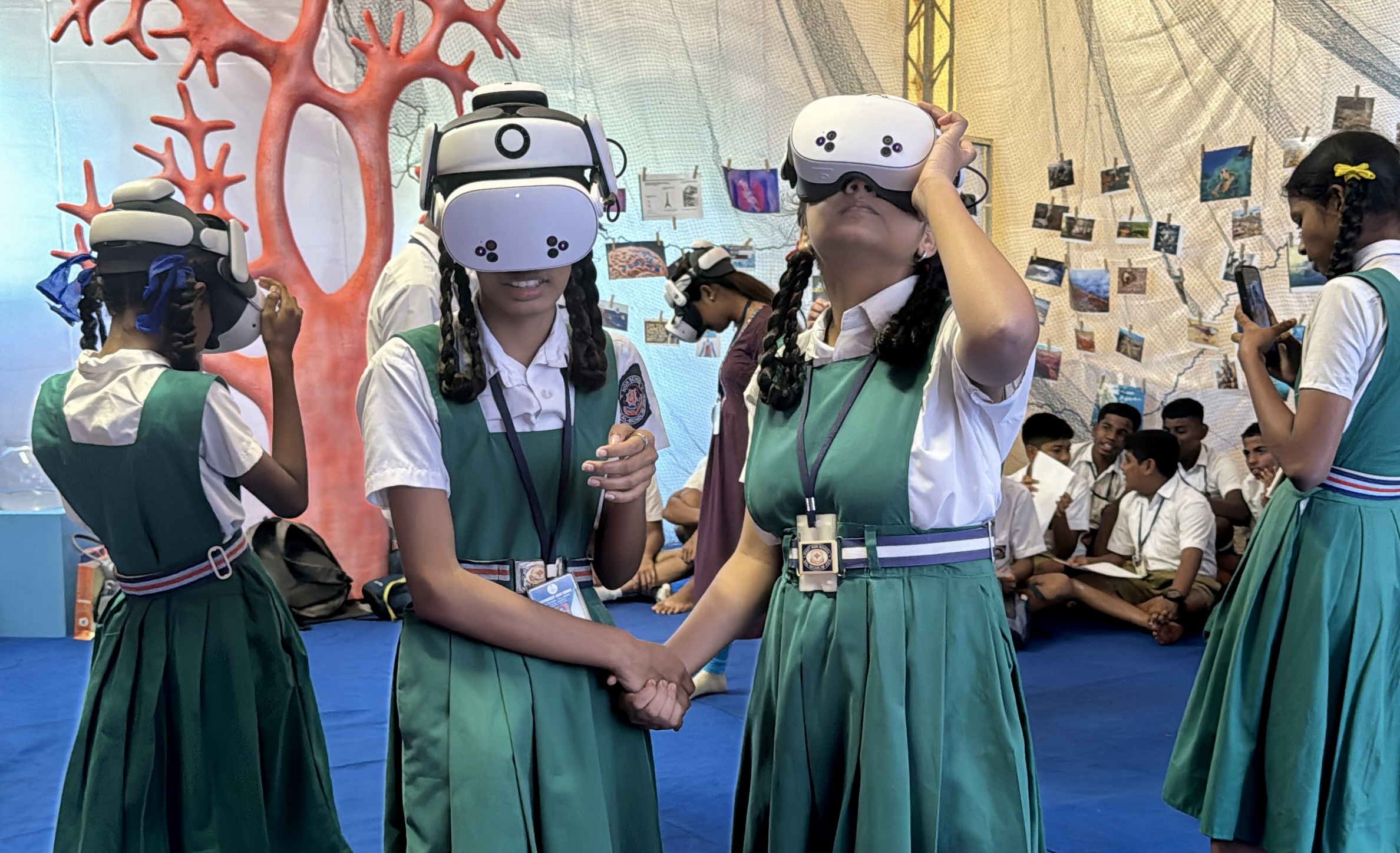
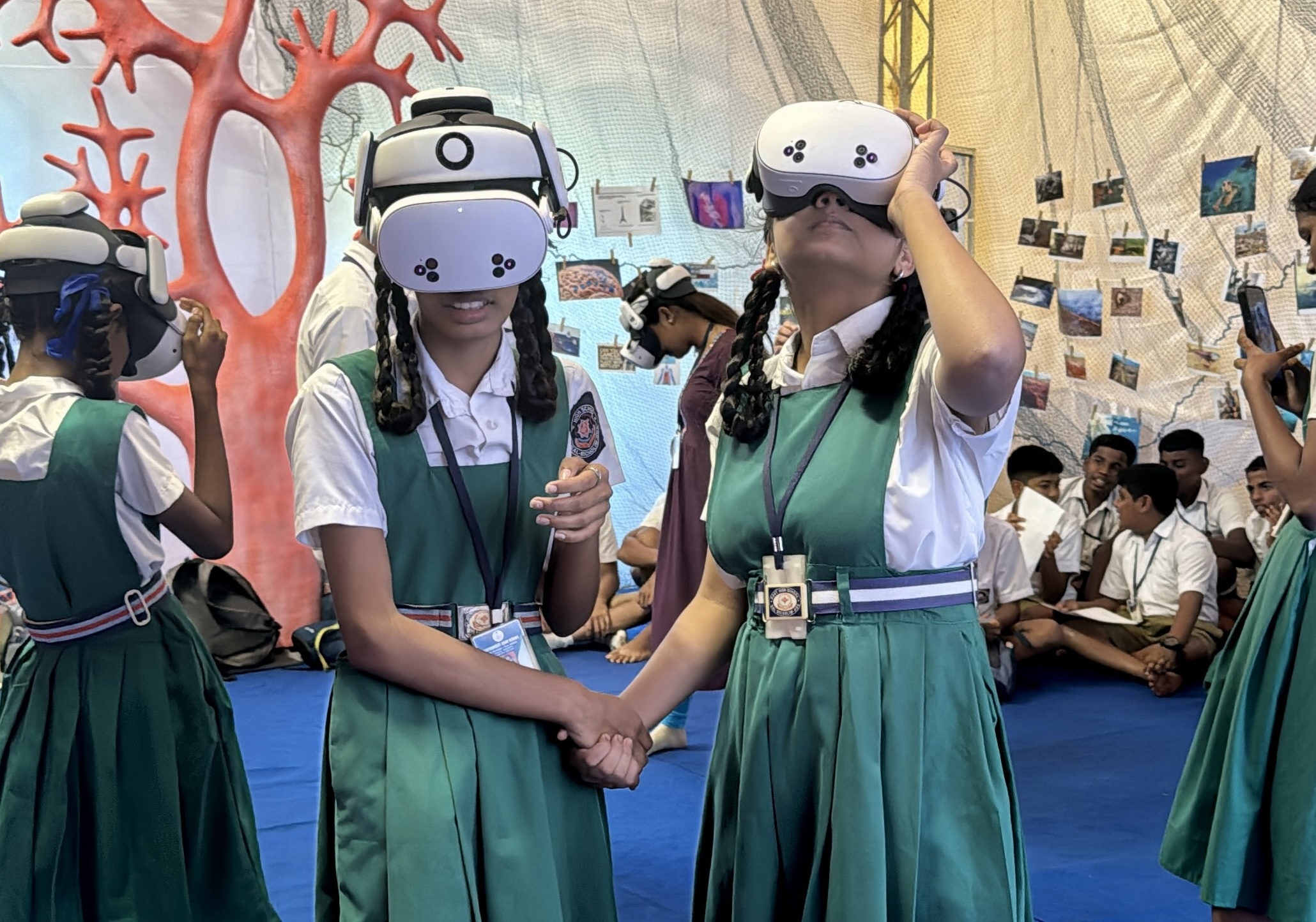
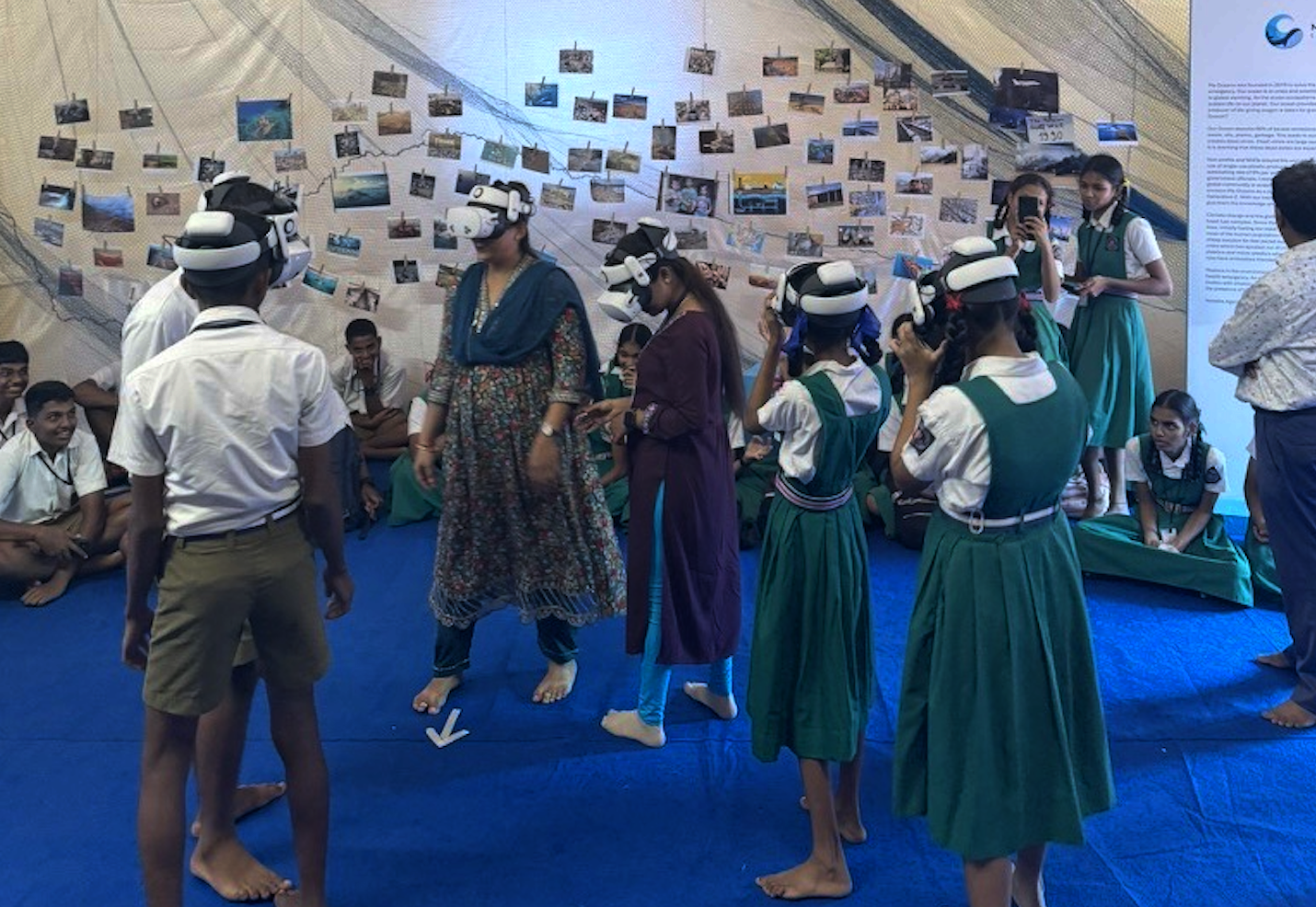
Over five days in a white tent on the grounds of Kala Academy in Panjim, over 1200 people walked in as ordinary visitors and came out having made a pledge they meant.

That's what happened when Planet Oceans debuted at the 55th International Film Festival of India. The experience centred on a VR film, A Drop in the Ocean, which puts you inside marine ecosystems as they actually are — alive, intricate, and under pressure from the plastic we've been producing for fifty years.

People took the headset off and signed an Impact form. 1100 people pledged to reduce their single-use plastic by at least 75%. That is a remarkable number. It didn't come from being lectured. It came from encounter.

Nandita Agarwal Parker, founder of Ma Oceans, has been saying for years that information alone doesn't change behavior, that what changes people is feeling something. Goa was the proof. When someone stands inside the beauty of a reef and feels what's happening to it, something shifts in them that a statistic in a report cannot reach.

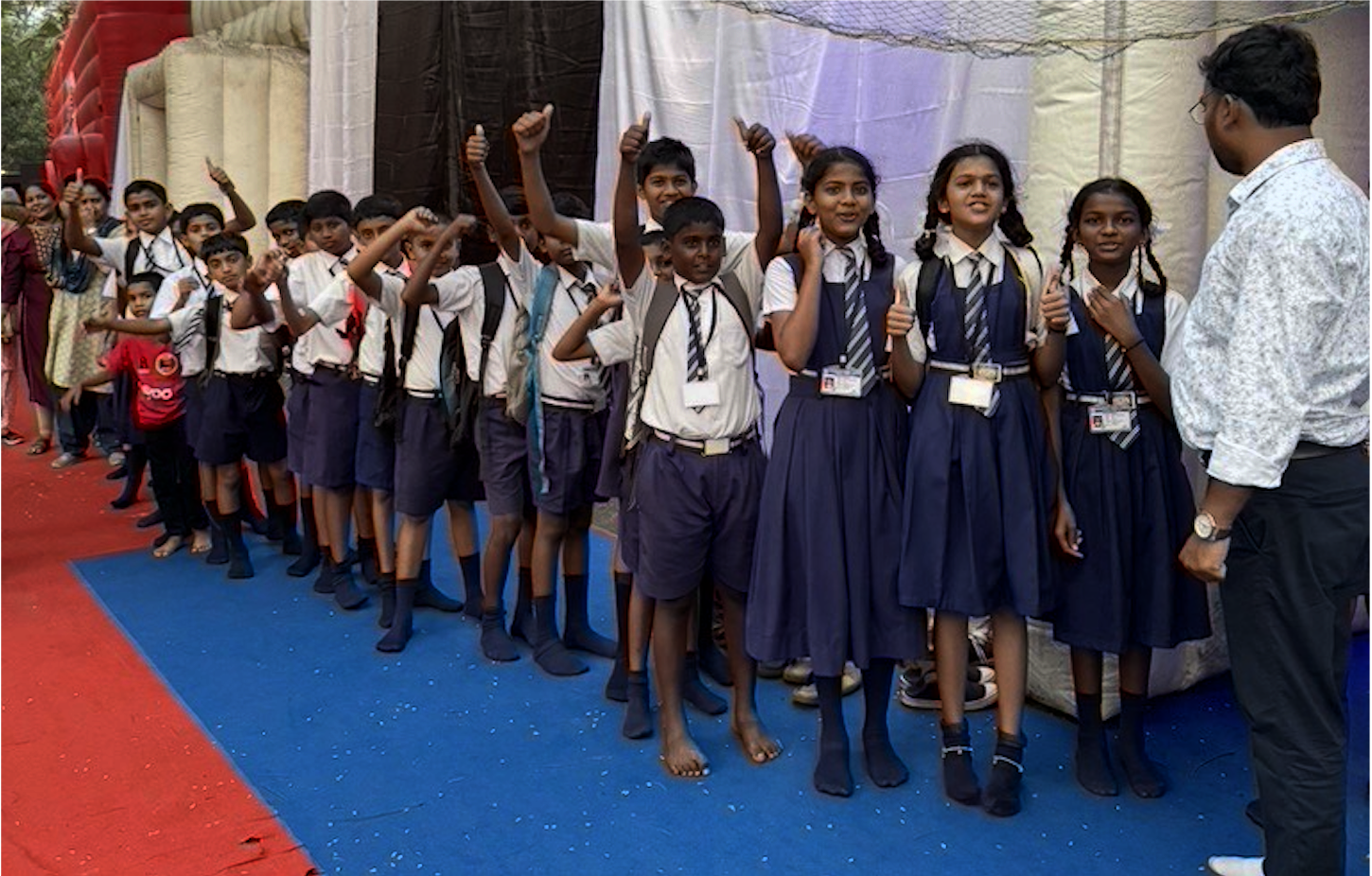
India produces an estimated 9.4 million tons of plastic waste every year. Planet Oceans is now taking this experience on the road, to schools, to communities, to wherever people are ready to feel the ocean and let it change them. "If we can take this to school children all over India, we will see a massive reduction in stress on our environment, air pollution and waste management infrastructure.” Nandita Parker said.

“We must involve children and Generation Z to inspire a global movement starting in India. Through knowledge, storytelling, and technology, Planet Ocean equips people with the tools and inspiration to support and protect our Mother Ocean."

The ocean has plastic in it.
So do you.

Fifty years ago plastic was a material. Today it is in mothers' milk, in placentas, in the walls of human arteries. Researchers have found it in the deepest ocean trenches and in the air above cities that have never seen a factory. It does not decompose. It breaks down into smaller and smaller pieces, each one still plastic, still accumulating in the tissues of every living thing that swims, breathes, or feeds in the sea.

The ocean absorbs what we discard. It always has. The difference now is that what we're discarding doesn't dissolve, doesn't return to soil, doesn't complete any cycle the living world knows how to process. It stays.

8M
tonnes of plastic enter the ocean every year — the equivalent of a rubbish truck emptying into the sea every minute
50yr
the time it takes for a plastic bottle to begin breaking down, during which it sheds microplastics continuously
100%
of sea turtles studied have been found to have ingested plastic — as have 90% of seabirds
9.4Mt
India's annual plastic waste — the largest single-country share of ocean plastic pollution on Earth
Your plastic footprint
How much plastic do you send to the ocean each year?
Adjust the sliders to see your annual plastic footprint.
Estimated share reaching the ocean

Are you ready to
enter the deep?

Help build the ecosystem of Ma Oceans, or simply participate in one of our experiences

Begin your relationship with the ocean